Disappearing Poverty
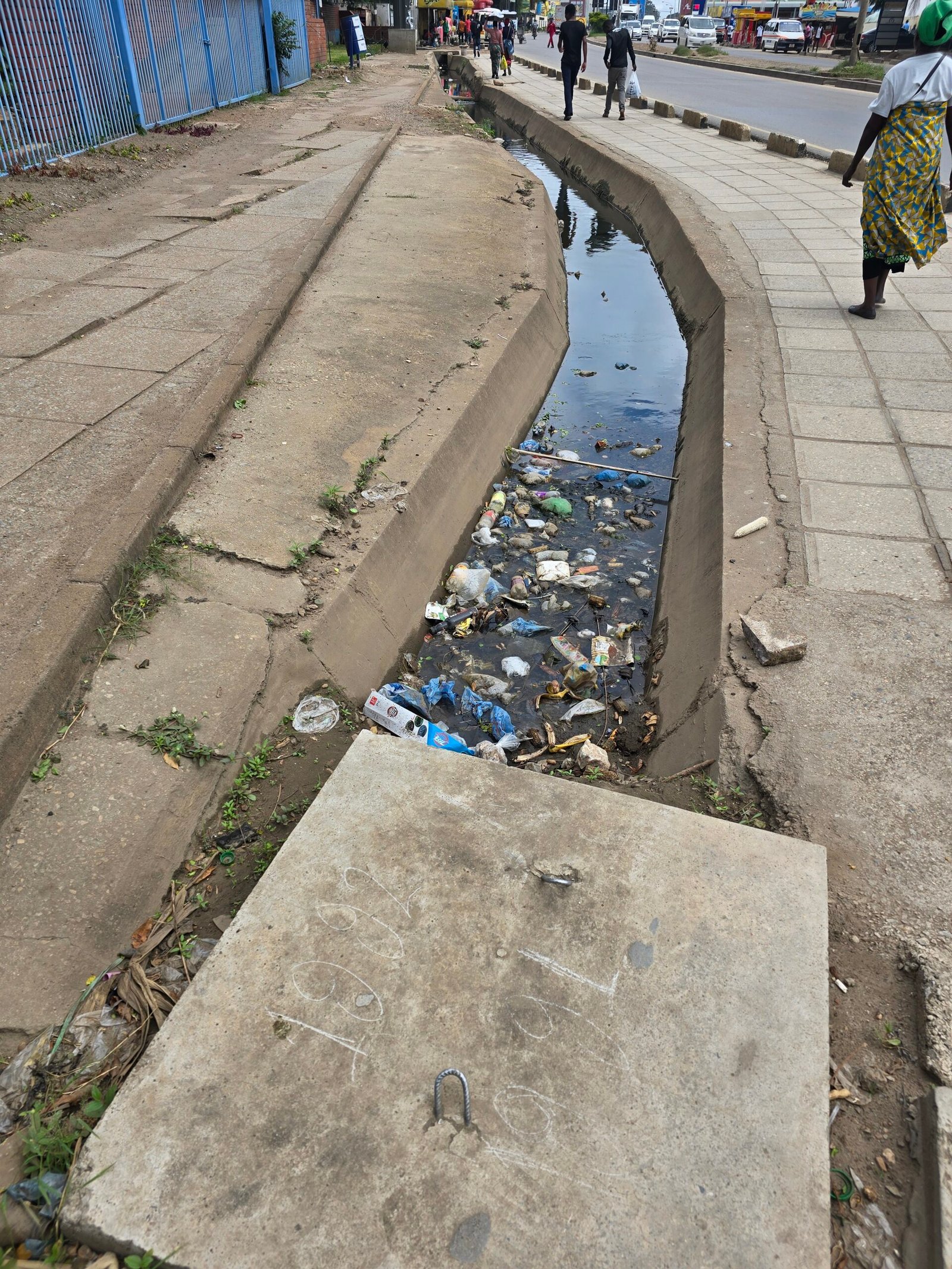
The managed disappearance of poverty — swept out of sight, while the queue at the borehole stays exactly the same length.
Over the years, as I have grown older, I’ve seen poverty disappear from my view. Ironically, as poverty has disappeared from view, it has statistically gotten worse. I’ve come to the stark realisation that poverty is deliberately being erased from view, while it practically stays the same or gets progressively worse. Basically, gentrification pushes the poor and the visible signs of poverty further and further away from view.
Every rainy season, when the annual cholera outbreak occurs, there is a push to remove street vendors from the streets and send them to so-called designated trading areas. These designated trading areas are markets dotted around the periphery of the city, out of sight of the moneyed and recently gentrified areas, and rather difficult or impractical to reach. One particular rainy season, when the cholera outbreak was rather severe, I found myself at Kabwata Market, where the filth was hidden from outside view by the walled and enclosed market. There was no difference between the lack of hygiene and amenities in that market and the streets that vendors were being kicked out of. Basically, the unsightly vendors who were branded as spreaders of cholera were herded out of “town” into markets that were just as bad as the undesignated trading areas.
Another managed disappearance is that of trash. Some of the most unsightly, unhygienic, ancient-looking trucks and tractors (with trailers) ply their trade as garbage collection and disposal vehicles, collecting trash on designated days from residential neighbourhoods. These often open and exposed trucks and tractors are a hazard on the roads, parking indiscriminately and assaulting one’s senses with their unsightliness and noxious, pungent aroma. They simply collect trash and go dump it in the former outskirts of the city. The garbage dumpsites are full, and trucks are prone to dumping trash on the roads leading to the dumpsites. Of course, since this is done out of sight of most, the system stays propped up by a public eager to export their trash to places they will never get to see in their lives. Keep one part of the city clean, while letting a few areas deal with the trash and the problems that the dumpsites bring to the populace near them.
Gentrification kicks the poverty can down the road, and in many cases the new moneyed class that takes over formerly “poor” areas is itself trapped in the cycle of want that poverty creates. An area called Chainda “Compound” is near where I’ve grown up and spent most of my life. I watched Chainda change from an area with no electricity or running water, with mud-brick houses with grass-thatched roofs, to mud-brick houses with plastic sheeting roofs, to brick-and-mortar shacks, to brick-and-mortar houses and semi-detached flats with “modern” fittings. I’ve watched Chainda change from gravel roads to tarred roads, from visible signs of extreme poverty to a sprawling concrete jungle of very decent-looking houses with electricity and running water. The main issue I have seen is that the running water is mainly improvised solutions from the community members with the means to DIY fix their supply. The only seemingly planned utility is from the state-owned power company, Zesco, which connected the houses with metered electricity supply. In all the 30-plus years I have lived nearby, I have not seen anyone fix the water supply problem, or the sewage problem. Pit latrines are still the norm, and it is common to see raw sewage runoff in the drainages.
In the end, even in places where poverty seems to have been erased or significantly reduced, it is right there in front of you if you dare look beneath the surface of quick fixes and the gentrified displacement of the poor”er” inhabitants of roadside shacks. It is even more glaring along Kafue Road, where, if you go right behind the modern roadside commercial structures, you find sprawling compounds hidden from sight.
 Written by
Mister Mulos, Esquire
Reader, foodie, amateur photographer and part-time philosopher, filing dispatches from Lusaka.